
7 Early Signs of Aging in Dogs and Cats Every Pet Parent Should Know
- HNDrop Pet's

- 21 hours ago
- 3 min read
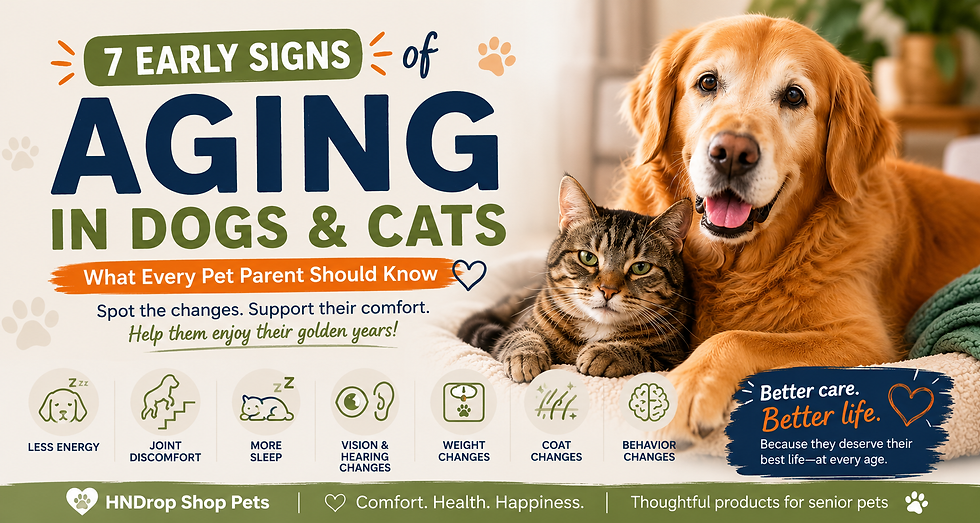
As much as we'd love for our furry friends to stay young forever, aging is a natural part of life. The good news? Recognizing the early signs of aging in dogs and cats can help you provide the care, comfort, and support they need to enjoy their golden years.
Whether you have a senior dog or an aging cat, knowing what changes to look for can make a big difference in their health and quality of life.
1. Less Energy and More Rest Time
One of the first signs of aging in pets is a decrease in energy levels. Your dog may not be as excited for long walks, or your cat may spend more time napping than playing.
While slower activity is normal, a sudden drop in energy should always be discussed with your veterinarian.
2. Difficulty Climbing Stairs or Jumping
Has your pet started avoiding stairs, couches, or beds?
Joint stiffness, arthritis, and reduced mobility are common in senior pets. These issues can make everyday activities more challenging and uncomfortable.
Many pet parents find that ramps, orthopedic beds, and mobility aids help their aging pets stay active and independent.
3. Changes in Sleeping Habits
Senior dogs and cats often sleep more than younger pets.
You may notice your pet:
Taking longer naps
Going to bed earlier
Waking up during the night
Becoming restless while sleeping
Providing a comfortable sleeping area can improve rest and overall well-being.
4. Vision and Hearing Loss
As pets age, their eyesight and hearing may gradually decline.
Common signs include:
Not responding when called
Bumping into furniture
Being startled more easily
Hesitation in unfamiliar environments
Creating a safe and predictable home environment can help your pet feel more confident.
5. Weight Changes
Unexpected weight gain or weight loss can be a sign that your pet's nutritional needs are changing.
Senior pets often require specialized diets to maintain a healthy weight and support joint, heart, and cognitive health.
Regular veterinary checkups are important for monitoring these changes.
6. Gray Hair and Coat Changes
Just like people, dogs and cats can develop gray hair as they age.
You may also notice:
A thinner coat
Drier skin
Less shine in their fur
Proper nutrition and grooming can help keep your pet comfortable and healthy.
7. Behavioral Changes
Aging pets sometimes show changes in personality and behavior.
Your pet may become:
More affectionate
More dependent
Less social
Easily confused
Anxious in new situations
These changes can be normal, but they should never be ignored.
How to Support an Aging Pet
If you're noticing signs of aging in your dog or cat, here are a few simple ways to help:
✔ Schedule regular veterinary visits
✔ Provide an orthopedic pet bed
✔ Encourage gentle daily exercise
✔ Maintain a healthy diet
✔ Make your home easier to navigate
✔ Monitor any changes in behavior or mobility
Small adjustments can have a huge impact on your pet's comfort and happiness.
Final Thoughts
Getting older doesn't mean your pet can't enjoy a happy, active life. By recognizing the early signs of aging in dogs and cats, you can take proactive steps to support their health and well-being.
At HNDrop Shop Pets, we're dedicated to helping senior pets live comfortably through every stage of life. From mobility solutions to comfort products, we're here to help your best friend enjoy their golden years to the fullest.
Because every pet deserves comfort, love, and care—at every age.

Comments